
Kashi Vishwanath Temple
- Kashi Vishwanath Temple, Varanasi, Uttar Pradesh, India
- April 22, 2026


| Main Deity | Lord Shiva (Kedarnath) |
|---|---|
| Location | Rudraprayag, Garhwal Himalayas, Uttarakhand, India |
| Temple Timings | 4:30 AM – 9:00 PM (May-November only); Closes 3-5 PM daily |
| Entry Fee | Free |
| Best Time to Visit | May-June; September-October |
| Significance | One of 12 Jyotirlingas; Char Dham; Panch Kedar |
Nestled amidst the majestic peaks of the Garhwal Himalayas, this sacred site is a revered pilgrimage destination that draws countless devotees from all corners of India and beyond. Standing at an elevation of 3,580 meters, it is not only one of the twelve Jyotirlingas dedicated to Lord Shiva but also a prominent part of the Char Dham pilgrimage circuit. The serenity of its surroundings, coupled with its spiritual vibrancy, makes this temple a significant beacon of faith and devotion.
The temple’s significance extends beyond its physical presence; it embodies the deep-rooted spirituality and unwavering devotion of countless individuals who journey to this remote location seeking blessings and solace. Each visit to this hallowed ground is an opportunity for pilgrims to connect with the divine, partake in age-old traditions, and immerse themselves in the peaceful ambiance that the temple exudes.
The origins of this sacred site are deeply intertwined with ancient Indian mythology, primarily linked to the legendary Pandavas from the epic Mahabharata. According to tradition, the temple was built by the Pandavas as an atonement for their sins during the Kurukshetra war. Over centuries, the temple has undergone significant transformations, most notably being restructured by the great philosopher and saint, Adi Shankaracharya, in the 8th century. His efforts were instrumental in reviving the worship of Lord Shiva and establishing the temple as a key spiritual center.
Throughout its history, the temple has faced numerous challenges, including natural calamities. Notably, it was buried under snow during the Little Ice Age from the 1300s to the 1900s, a testament to the harsh climatic conditions of the region. In more recent times, the devastating floods of 2013 severely damaged the temple and its surrounding areas. However, the resilience of the local community and the commitment to preserving this revered site led to significant restoration efforts, allowing the temple to once again welcome devotees.
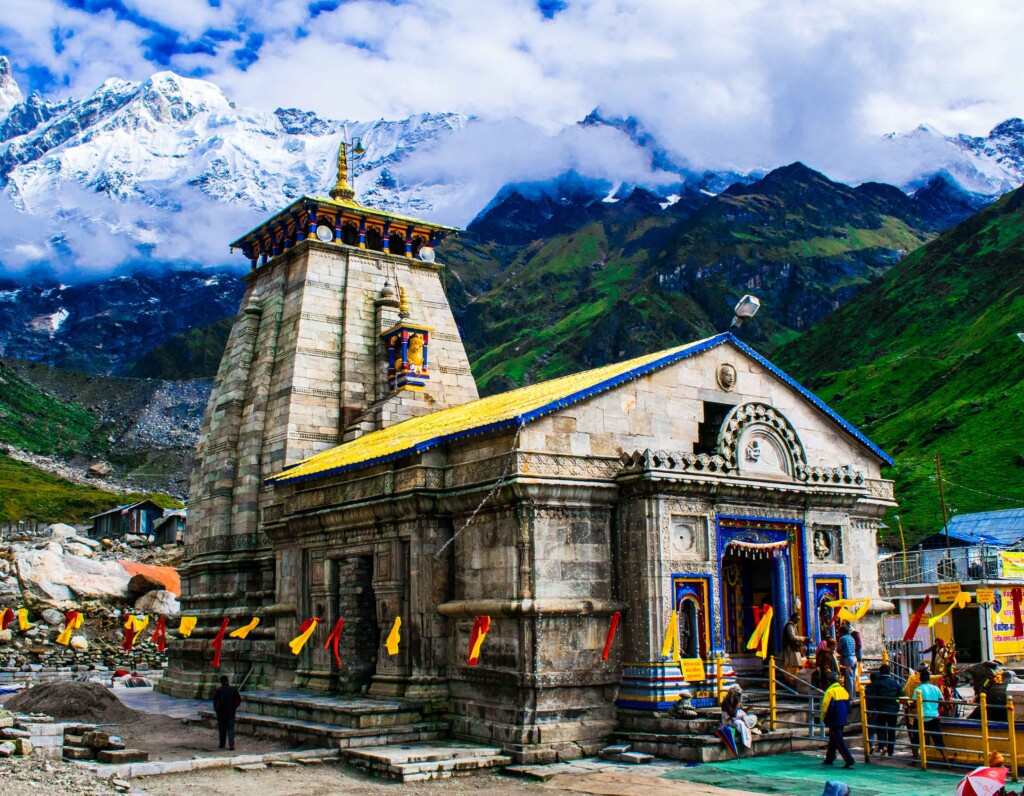
The architectural beauty of this sacred site is a harmonious blend of traditional Himalayan styles, characterized by its stone structure, intricate carvings, and strikingly crafted wooden doors. The temple’s facade is adorned with exquisite sculptures and carvings that narrate tales from Hindu mythology, inviting visitors to explore the rich tapestry of stories embedded within its walls. The overall design reflects an enduring connection to the natural landscape, seamlessly integrating into the breathtaking backdrop of the mountains.
One of the temple’s most distinctive features is its pyramidal roof, which rises majestically towards the sky, symbolizing the ascent of the soul to the divine. The interiors, though modest in decoration, offer an atmosphere of tranquility and reverence, encouraging deep contemplation and devotion. The setting itself, surrounded by towering peaks and pristine rivers, enhances the temple’s majestic presence, making it a true marvel of spiritual architecture.
This sacred site holds immense significance for devotees who embark on the challenging journey to pay homage to Lord Shiva. Many believe that visiting the temple purifies the soul and offers a path to liberation (Moksha). The temple is steeped in legends, one of the most popular being the story of the Pandavas, who sought Lord Shiva’s blessings after the great war. It is said that he manifested himself in the form of a linga at this site, marking it as a powerful place of worship.
Additionally, the temple is a vital part of the Char Dham pilgrimage, symbolizing the spiritual journey one undertakes in life. The act of traveling to this remote location is seen as a metaphor for overcoming life’s challenges, making the pilgrimage not just a physical journey, but a deeply transformative spiritual experience.
The temple comes alive during major annual festivals, attracting thousands of pilgrims and devotees who seek to partake in the vibrant celebrations. One of the most significant events is the Maha Shivaratri, a night dedicated to Lord Shiva, during which devotees engage in night-long vigils, chanting, and prayer. The atmosphere is electric, filled with devotion and fervor, as people from diverse backgrounds unite to celebrate the divine.
Another important occasion is the opening of the temple after the winter closure, typically around late April or early May. The ceremonial opening is marked by elaborate rituals, where the idol of Lord Shiva is ceremoniously brought out and worshipped, symbolizing the arrival of spring and the resumption of pilgrimages. Throughout the season, daily rituals and offerings continue to attract a steady stream of devotees, each eager to experience the temple’s spiritual ambiance.
There are no reviews yet.
Worth ₹2,000 — 100% FREE
Already have an account? Log in
