
Karna in the Mahabharata: The Tragic Hero
16 July 2026
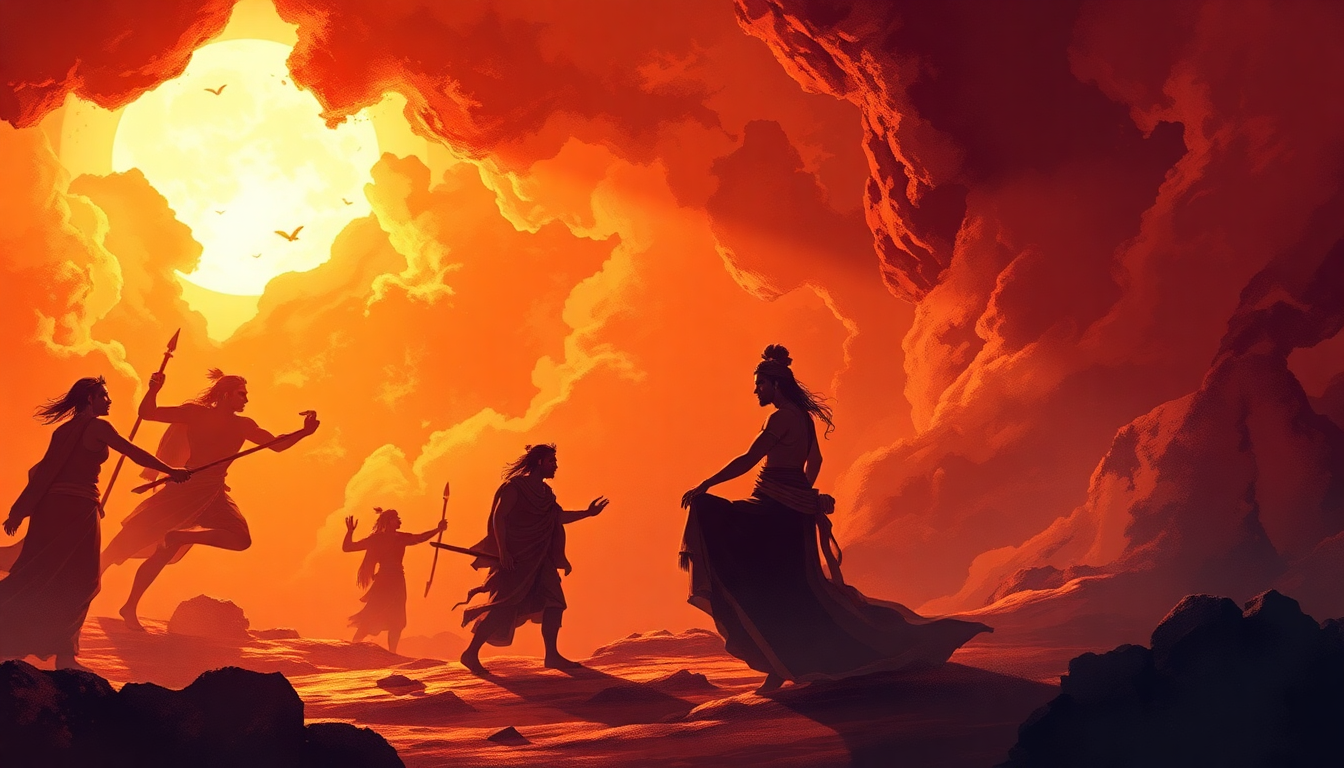
Karna, one of the most compelling characters in the Mahabharata, embodies the essence of a tragic hero, marked by his noble qualities and profound misfortunes. Born to the unwed princess Kunti as a result of a boon granted to her by Sage Durvasa, Karna was the son of the sun god, Surya. This divine parentage endowed him with extraordinary skills and strength, but his birth was shrouded in secrecy and abandonment. Kunti, fearing societal stigma, cast him away at birth, placing him in a basket and setting him afloat on a river. Thus began Karna's tumultuous journey, one that would intertwine his fate with the great Kurukshetra War.
Adopted by a charioteer and raised in a humble environment, Karna faced the harsh realities of life from a young age. Despite his royal lineage, he experienced the prejudice of being a "Suta," a term used to describe the offspring of a lower caste. This societal rejection fueled his ambition and desire for recognition. With an unwavering resolve to prove himself, Karna sought training in archery and martial arts, ultimately becoming a formidable warrior. His relentless pursuit of greatness led him to Dronacharya, the legendary teacher of the Kauravas and Pandavas. However, when Dronacharya refused to teach him due to his caste, Karna's determination only intensified. He sought the guidance of Parashurama, a great sage known for his mastery of warfare. Under Parashurama, Karna honed his skills and emerged as one of the finest archers of his time, rivaling even Arjuna, the Pandavas' greatest warrior.
Karna's loyalty to Duryodhana, the eldest of the Kauravas, was a defining aspect of his character. When Duryodhana extended his friendship and support to Karna, recognizing his talents and potential, Karna found in him a bond that transcended mere camaraderie. This friendship was rooted in mutual respect and understanding, as both faced societal rejection. Duryodhana's unwavering faith in Karna, especially during the infamous tournament where Karna was initially humiliated by the Pandavas, solidified their alliance. In a world rife with betrayal and shifting loyalties, Karna’s steadfast allegiance to Duryodhana became a double-edged sword. His loyalty, while noble, ultimately led him to fight against his own brothers, the Pandavas, in the great war that would decide the fate of the kingdom.
The rivalry between Karna and Arjuna is one of the most poignant narratives within the Mahabharata. Both warriors, endowed with exceptional skills, were destined to clash on the battlefield. Karna, aware of his true lineage, harbored a deep sense of resentment towards Arjuna, who was often celebrated and revered. Their enmity was not merely personal; it was emblematic of the larger conflict between the Kauravas and Pandavas. Each encounter between them was steeped in tension, ultimately culminating in their fateful duel on the battlefield of Kurukshetra. Karna's defeat at the hands of Arjuna was not just a loss of life; it was a loss of identity, a culmination of years of struggle against societal norms and personal demons.
What makes Karna one of the most tragic figures in the Mahabharata is the profound irony that permeates his life. Despite his valor and unwavering loyalty, he was often depicted as a villain, primarily due to his association with Duryodhana. His tragic flaw, a deep-rooted sense of loyalty, ultimately led him to fight on the wrong side of dharma, the moral law that governs human conduct. In the end, Karna's life is a tapestry woven with threads of valor, loyalty, and heartbreak. As he lay dying on the battlefield, he was confronted by the realities of his choices, the knowledge of his true identity, and the haunting realization of his lost potential.
Karna’s story resonates deeply within the framework of Hindu spirituality, illustrating the complexities of human emotions, the struggles between duty and righteousness, and the inexorable fate that binds us all. His life serves as a poignant reminder that even the most heroic figures can be ensnared by their circumstances, making him an enduring symbol of tragedy and nobility in the grand narrative of the Mahabharata.
Read more daily wisdom, panchang, and personal Kundli guidance in the Sanathan app.
Be a part of the Sanathan movement
Follow Sanathan, share this page with someone who'd love it, and help carry Sanatan Dharma's wisdom to more hearts, one page at a time.
Jai Shri Ram! 🚩 🕉️
Explore the Sanathan Way