
Karwa Chauth Vrat Katha — The Story Behind the Fast
16 July 2026
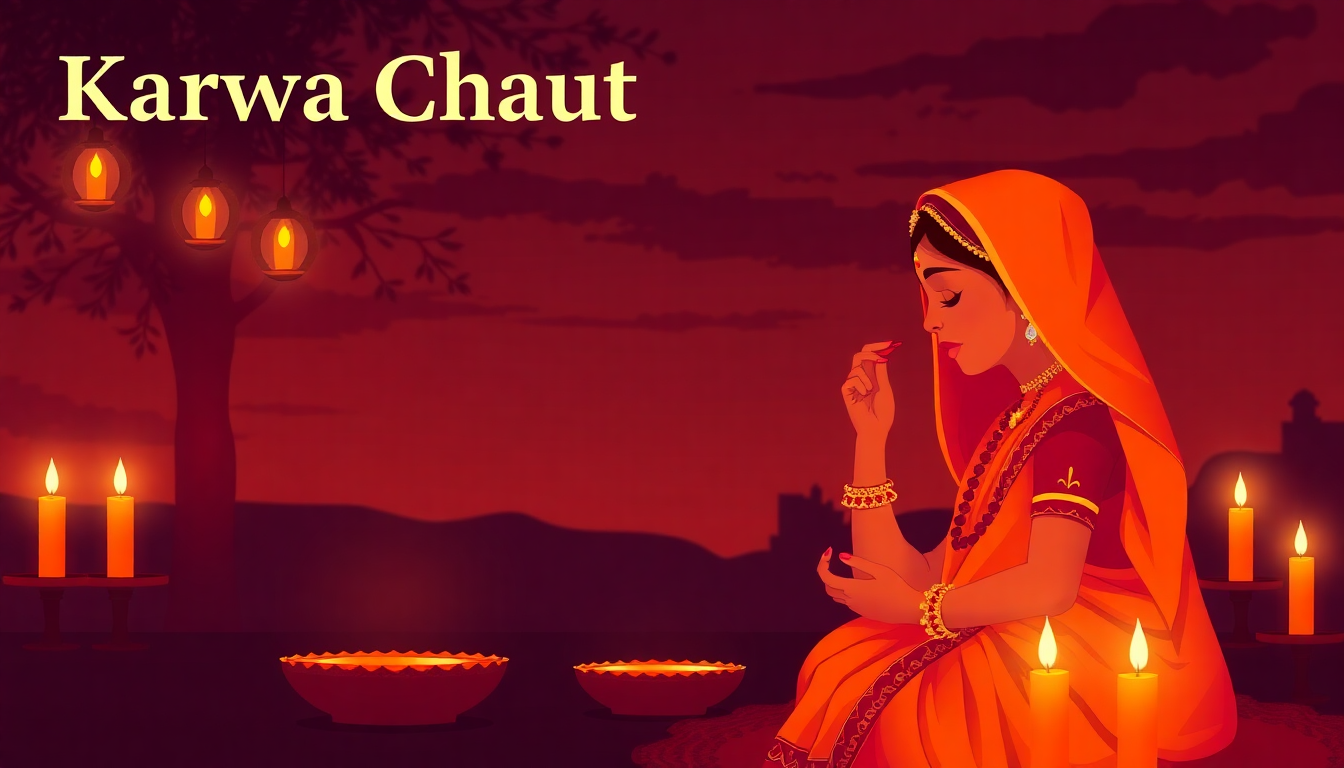
In the heart of India, where traditions weave the fabric of daily life, the festival of Karwa Chauth holds a special place in the hearts of married women. This day, dedicated to the well-being and longevity of their husbands, is steeped in rich lore, and at the center of it lies an enchanting story that has been passed down through generations, a tale that embodies love, devotion, and the strength of a woman's spirit.
The legend of Karwa Chauth is often told through the story of a devoted wife named Veeravati. She was the cherished daughter of a loving family, raised with the values of love, fidelity, and duty. As she grew, her beauty and grace captivated many, but it was her heart that truly shone. When the time came for her to marry, she found herself wed to a handsome prince, who was kind and compassionate. Their union was celebrated with joy, and they began their life together, enveloped in love.
However, as fate would have it, Veeravati's happiness was soon challenged by a series of unfortunate events. One day, while observing the sacred fast of Karwa Chauth for her husband, she was unable to complete the rituals due to the overwhelming desire to see her beloved. Her brothers, who were protective of their sister, brought her to a nearby village where they consoled her, assuring her she could break her fast. However, Veeravati’s heart was heavy with the weight of her vows. She longed to see her husband and fulfill her duty as a devoted wife. In her desperation, she broke her fast and ate a morsel of food.
As soon as she did, a dark cloud seemed to overshadow her life. Her husband fell gravely ill, and the once vibrant home turned into a place of sorrow. Stricken with guilt, Veeravati realized that her actions had consequences, and she was determined to rectify her mistake. She embarked on a journey to seek the blessings of the goddess Parvati, hoping to restore her husband’s health. She traveled through forests and mountains, facing trials and tribulations, yet her love remained unyielding.
Upon reaching the sacred shrine, Veeravati prayed fervently, pouring her heart out to the goddess. She vowed to observe the fast with unwavering dedication and to never again let her longing overshadow her duties. The goddess, moved by her devotion, appeared before her, offering guidance. She instructed Veeravati to return home and perform the rituals of Karwa Chauth with sincerity and love. With newfound hope, Veeravati hurried home, ready to embrace her responsibilities with renewed vigor.
On the day of Karwa Chauth, she prepared herself meticulously, adorning her body in traditional attire and applying henna to her hands. As the sun set, she gathered with other women in the village, each sharing stories of love and sacrifice. Together, they prayed and performed the rituals with devotion. As the moon rose, Veeravati caught her first glimpse of its silvery glow. With her heart racing, she offered prayers to the moon, and then to her husband, who stood beside her, healthy and radiant. The goddess had answered her prayers, restoring her husband’s health and blessing their union.
From that day forth, the fast of Karwa Chauth became a symbol of love and dedication among married women. It is said that the festival serves as a reminder of the power of devotion and the strength of a woman’s love. The story of Veeravati inspires countless women to uphold their commitments, nurturing their relationships with care and reverence.
In modern times, the observance of Karwa Chauth has evolved while still retaining its essence. Women today prepare for the fast with great enthusiasm, often sharing the experience with friends and family, creating bonds of solidarity. The day is marked by rituals that include dressing in beautiful attire, applying mehndi, and gathering for communal prayers. The significance of the fast has transcended mere tradition; it has become a celebration of love, resilience, and the unbreakable bond between partners. As women fast from sunrise to moonrise, they not only honor their husbands but also reflect on their own strength and the profound connections they share within their families.
Read more daily wisdom, panchang, and personal Kundli guidance in the Sanathan app.
Be a part of the Sanathan movement
Follow Sanathan, share this page with someone who'd love it, and help carry Sanatan Dharma's wisdom to more hearts, one page at a time.
Jai Shri Ram! 🚩 🕉️
Explore the Sanathan Way