
Lord Rama: The Ideal King of the Ramayana
16 July 2026
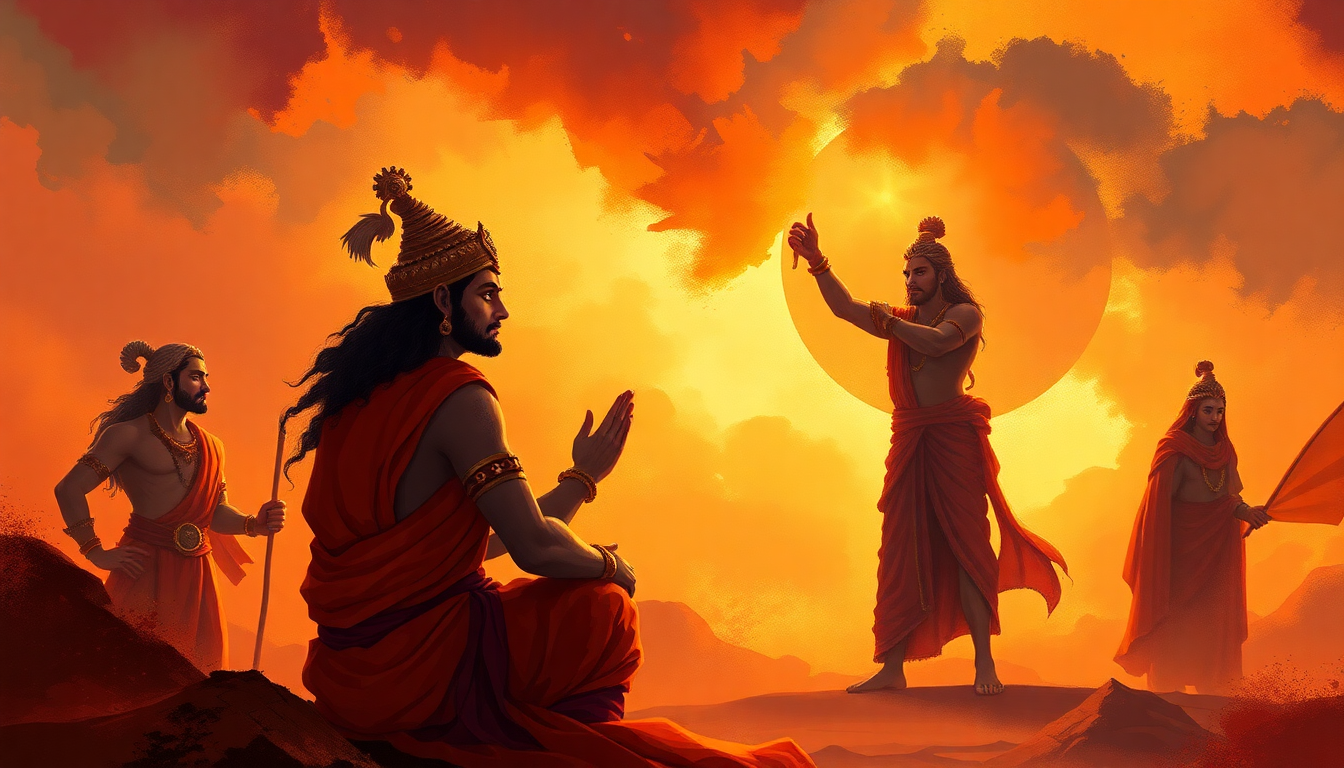
In the vast tapestry of Hindu mythology, Lord Rama stands out as a paragon of virtue, embodying the qualities of an ideal king and a righteous human being. His story, intricately woven into the fabric of the Ramayana, serves as a timeless narrative that transcends generations, offering lessons on dharma, duty, and devotion. As the seventh avatar of Lord Vishnu, Rama is revered not only for his divine lineage but for his exemplary character that resonates deeply with the ideals of leadership and moral integrity.
Rama's life is marked by a series of trials that test his resolve and commitment to righteousness. Born to King Dasharatha and Queen Kausalya in the kingdom of Ayodhya, Rama was destined to be the king. His life, however, took an unexpected turn when his stepmother, Kaikeyi, demanded that her son Bharata be crowned king instead. In a heart-wrenching act of loyalty to his father's promises, Rama chose to honor the wishes of Kaikeyi, sacrificing his claim to the throne. This decision, though painful, highlights his unwavering adherence to dharma—the principle of cosmic order, duty, and righteousness.
Rama's exile to the forest for fourteen years is a poignant chapter in his narrative. Accompanied by his devoted wife Sita and his loyal brother Lakshmana, Rama embraced a life of simplicity and hardship in the wilderness. This period of exile is not merely a backdrop for his adventures but a profound exploration of sacrifice, loyalty, and the challenges of maintaining one's principles in the face of adversity. During these years, Rama encounters various sages, demons, and creatures, each encounter serving as a lesson in morality and virtue. His interactions with these beings further emphasize his role as Maryada Purushottama, or the ideal man, who upholds the highest standards of righteousness.
One of the most significant episodes in Rama's life is the abduction of Sita by the demon king Ravana, which sets the stage for Rama's quest to rescue her. This quest is not just a battle against evil but a demonstration of the lengths to which Rama will go to protect his loved ones and uphold justice. The alliance he forms with Hanuman and the monkey army symbolizes the importance of camaraderie and collaboration in overcoming formidable challenges. The epic battle that ensues is a testament to Rama's valor and strategic acumen, culminating in the defeat of Ravana. This victory is not merely a personal triumph; it represents the restoration of dharma and the cosmic order, reinforcing the belief that good ultimately prevails over evil.
Rama's return to Ayodhya after his exile marks the beginning of a new era for his kingdom. His coronation is not merely a celebration of his kingship but a recognition of his character and the values he embodies. As king, Rama is the epitome of an ideal ruler, governing with wisdom, compassion, and fairness. His reign is characterized by peace, prosperity, and adherence to dharma, earning him the title of Maryada Purushottama. The citizens of Ayodhya, inspired by his example, thrive under his rule, and his governance becomes a benchmark for leadership in Hindu tradition.
The significance of Lord Rama in Hinduism extends beyond the narrative of the Ramayana. He is revered as an ideal human being, whose life serves as a guide for ethical conduct and moral decision-making. His unwavering commitment to truth, justice, and duty resonates with followers, influencing their personal and social lives. Festivals such as Rama Navami celebrate his birth, while Diwali commemorates his return to Ayodhya, symbolizing the victory of light over darkness and good over evil.
In contemporary society, Rama's ideals continue to inspire individuals to strive for righteousness in their own lives. His story encourages the pursuit of dharma in various roles—be it as a leader, a spouse, or a friend. The lessons drawn from his life remain relevant, urging individuals to balance personal desires with societal responsibilities.
In essence, Lord Rama embodies the essence of ideal kingship and moral integrity. His journey through exile, trials, and eventual triumph serves as a beacon of hope and virtue, illustrating the power of righteousness in the face of adversity. As the Maryada Purushottama, he remains a guiding light for millions, illuminating the path toward a life of purpose, honor, and devotion. Through the lens of his life, followers of Hinduism are reminded of the profound impact that adherence to dharma can have on both personal fulfillment and communal harmony, solidifying Lord Rama's place as a central figure in Hindu spirituality.
Read more daily wisdom, panchang, and personal Kundli guidance in the Sanathan app.
Be a part of the Sanathan movement
Follow Sanathan, share this page with someone who'd love it, and help carry Sanatan Dharma's wisdom to more hearts, one page at a time.
Jai Shri Ram! 🚩 🕉️
Explore the Sanathan Way